Elderberries
Anishinaabemowin: papashkisiganak | Plains Cree: sâsâkominân | Ojibwe: bibigwemin
Readiness
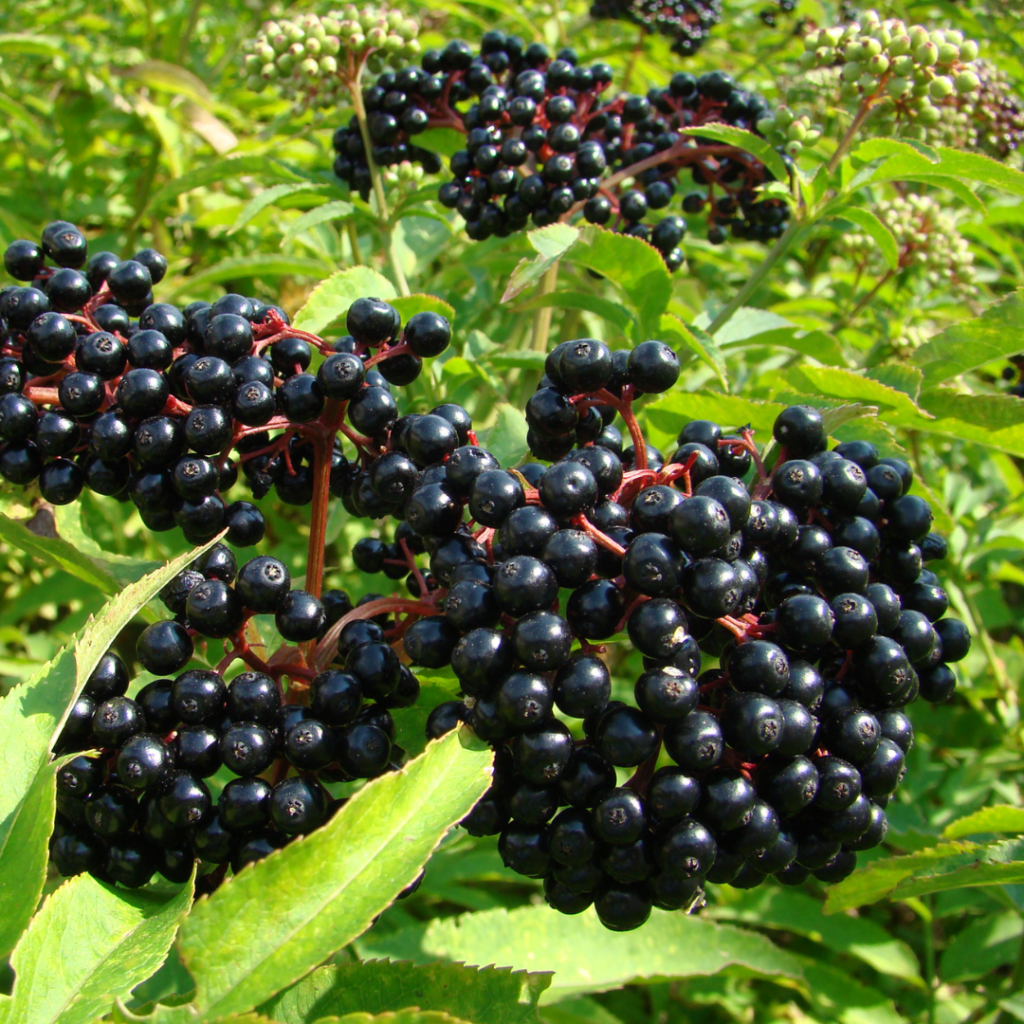
Ripe between mid August to mid September
Ripe elderberries are a deep purple to black colour and produce dark purple juice when squeezed. Raw elderberry is toxic to ingest, so the color of the juice should be used to indicate ripeness, not flavour.
Underripe elderberries have green skin, and their juice is pale and watery. Green or bright red elderberries are possibly toxic even when cooked.
Harvesting
Average yield 10 to 25 lbs
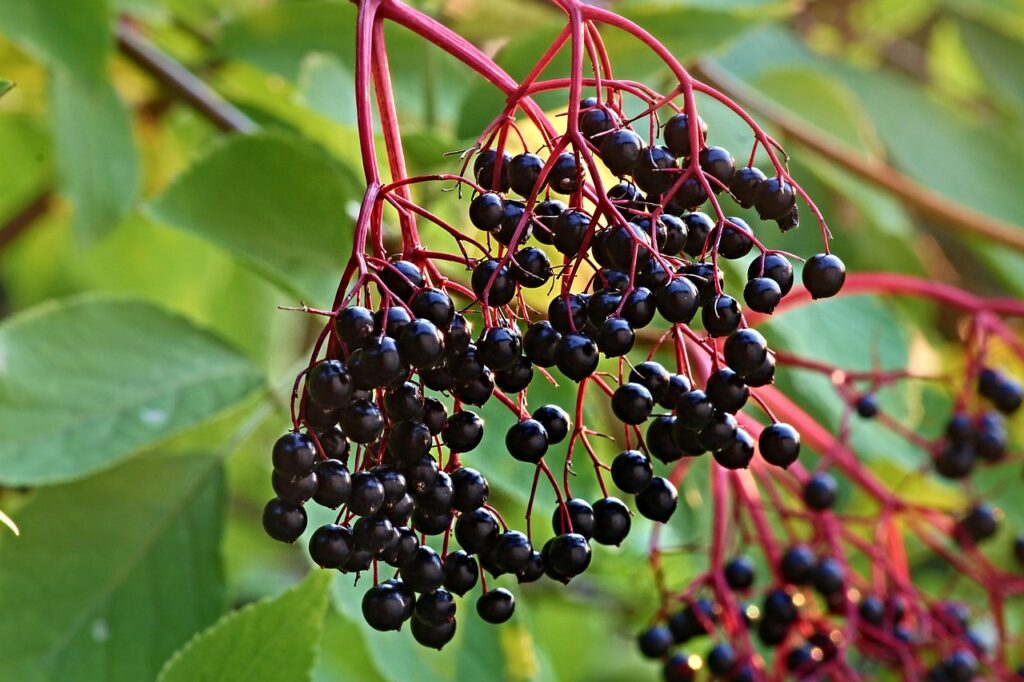
Remove the cluster as a whole by snapping the stem at the base of the branch. Place clusters in bowl or box.
Storing and Eating
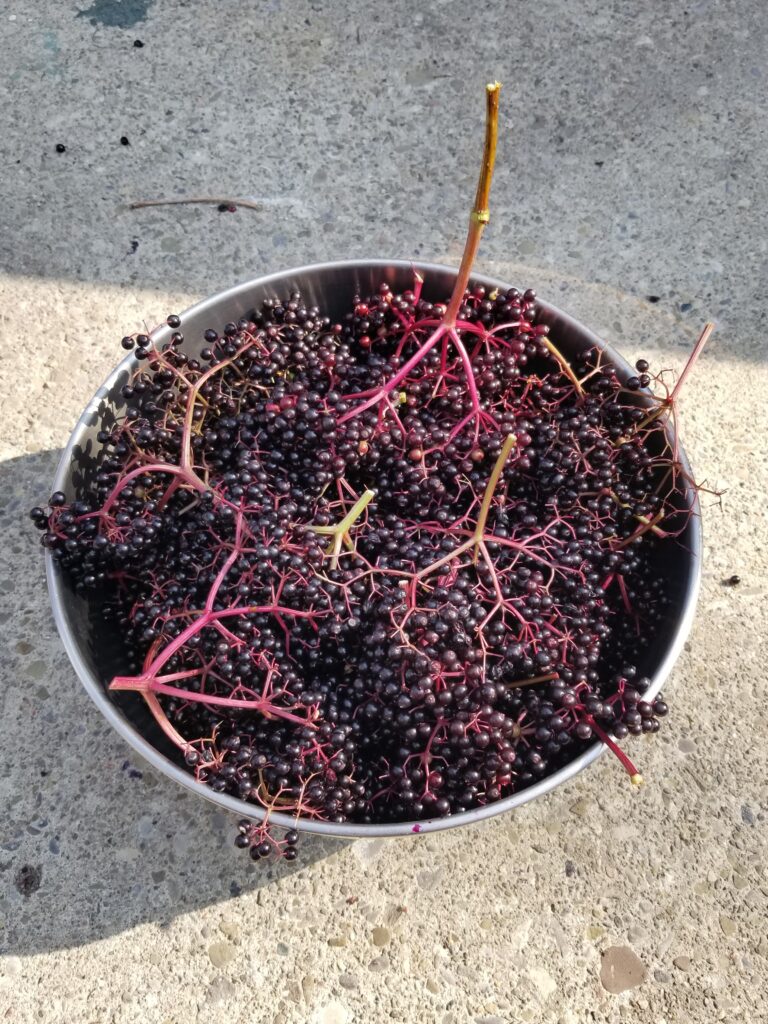
Keep all the berries on the cluster until you are ready to process them. Store unwashed berries in a loosely covered container in the fridge for 1-2 days.
Remove the berries from the stem by holding the cluster over a bowl with one hand and gently running your other hand down the cluster, separating each berry and allowing it to fall into a bowl below.
Cook or freeze as soon as possible. To freeze, first wash and dry the berries on or off the stems. Freeze on a single layer on a baking sheet, then transfer to a bag or container. Frozen apples are best used for baking and cooking, and can be used without thawing. Apple sauces and juice can also be frozen. Use within 6 months.
Elderberries are popular for their unusual flavour in pies, jellies, and jams, and are sometimes used in winemaking.