Plum
Cree: sóminátik | Ojibwe: bagesaan
Readiness
Ripe between mid July to early September
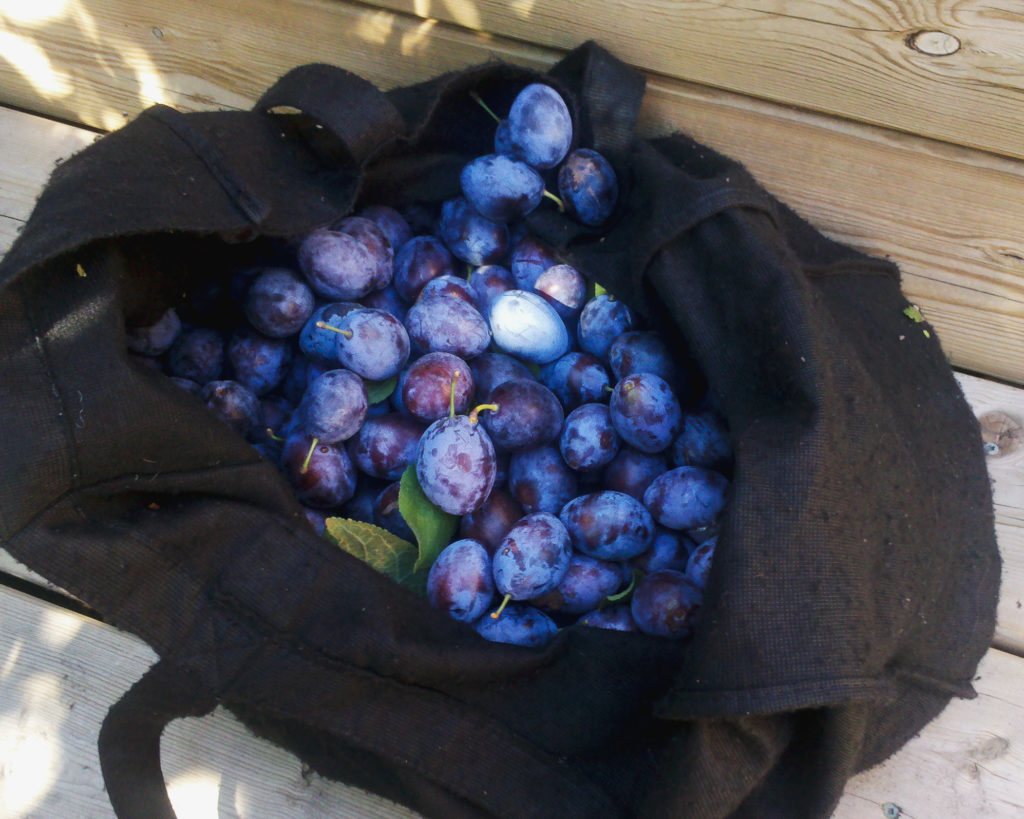
Ripe plums can be purple, blue, green, yellow and/or red, depending on variety.
Fruit may have bloom (a white, powdery substance) on the skin, which is a harmless fungus that feeds on the fruit’s sugars. Ripe plums are soft, fragrant, and taste sweet or slightly tart.

Harvesting
Average yield 15 to 100 lbs
Hand-picking is best; twist gently and try to leave stem attached. Plums are quite fragile, so place them in shallow containers and do not pile them too high. Can be picked slightly underripe.
Plums work great with the shake and catch method. With the assistance of 3-4 people (or bungee cords), hold up a tarp or a bedsheet by its corners a few feet off the ground. Use a long tool like a picking pole, broom, or rake to hook tree branches and gently vibrate them to let the ripe fruit fall on the tarp. Do not lay the tarp on the ground as the fruit will smash.

Storing and Eating
Plums will continue to ripen off the tree, on the counter.
Ripe plums need to be stored in a refrigerator and will last up to a week. Plums will not continue to ripen in the fridge, so make sure they are fully ripe before chilling.
To freeze, first wash, halve, and remove the pits. Freeze on a single layer on a baking sheet, then transfer to a bag or container. Frozen fruits are best used for baking and cooking, and can be used without thawing. Use within a year.
References:
- Indigenous names: Cree Dictionary; Ojibwe People’s Dictionary; Anishinaabemowin Theme-Based Resource Book