Pawpaw
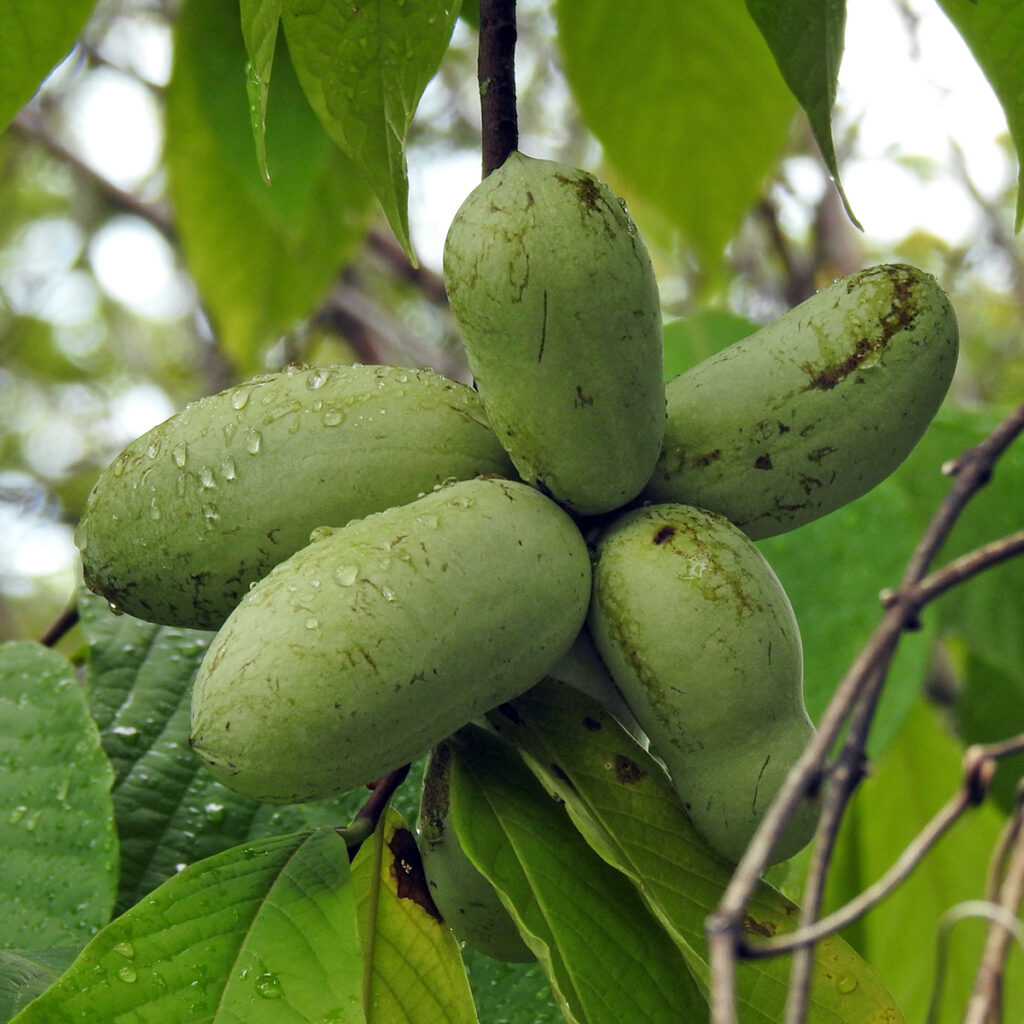
Readiness
Ripe between mid September to mid October
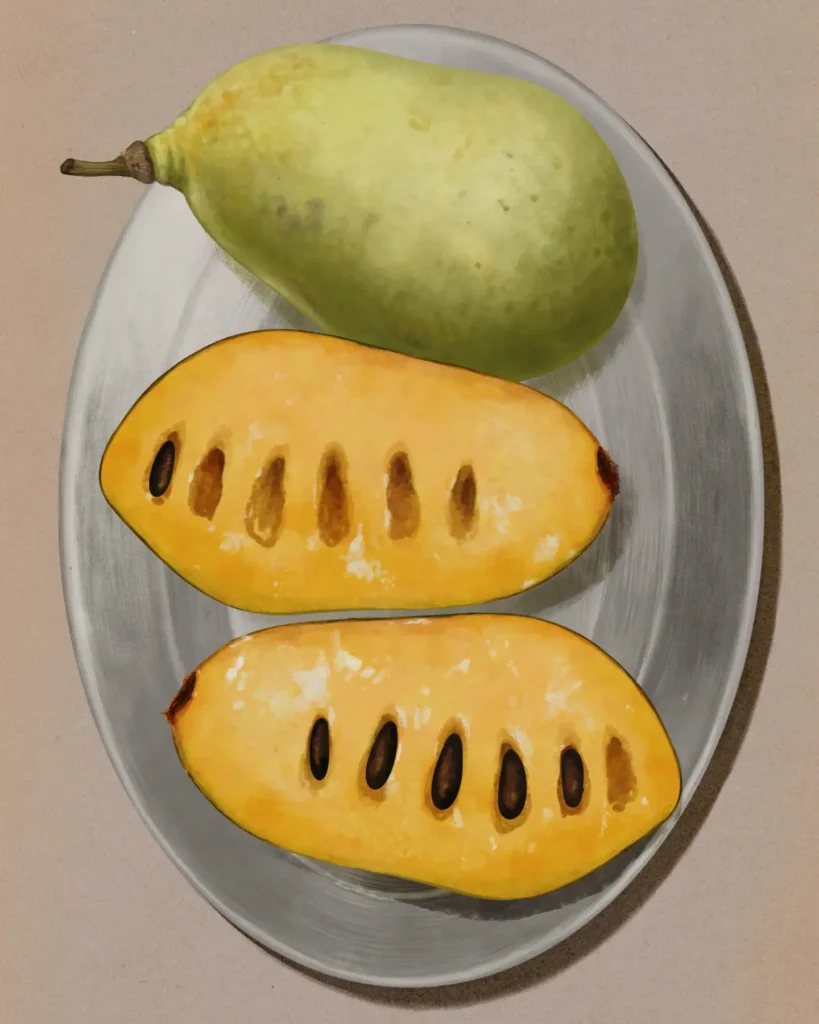
Pawpaws can be tricky because they often stay green when ripe (though some turn slightly yellow). The best way to tell is by touch: give the fruit a gentle squeeze. If it gives in to soft pressure like a peach, it’s ready! Ripe pawpaws will be fragrant and have a custard-like yellow center that tastes like a tropical mix of mango, pineapple, and banana. If they are hard and odorless, they are underripe; if they develop brown spots, they are nearing overripe.

Harvesting
Average yield 10 to 150 lbs
Gently pull on the top of the stem to remove the fruit. Be extremely careful not to break the skin, as the fruit is very fragile. The less damage done during the harvest, the longer the fruit will last before spoiling.
Storing and Eating
Pawpaws have a very short shelf life and should be eaten or processed immediately. If they start to develop brown spots, eat them right away or move them to the fridge to squeeze out a few more days of freshness.
Note: Pawpaws emit ethylene gas, which will cause other nearby produce to ripen (and potentially rot) faster, so store them accordingly.
References:
- Indigenous names: Cree Dictionary; Ojibwe People’s Dictionary; Anishinaabemowin Theme-Based Resource Book