Crabapples
Cree: sâkîw
Readiness
Ripe between mid July to mid October
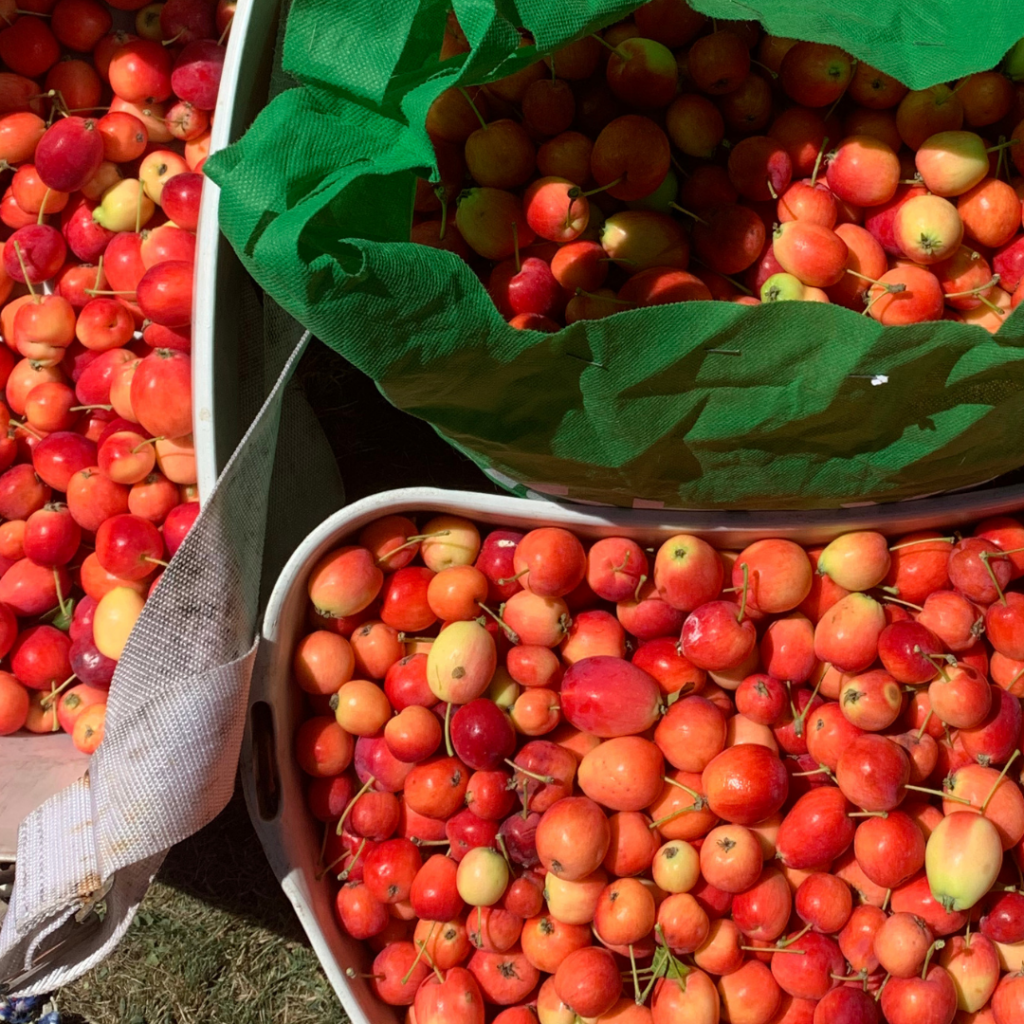
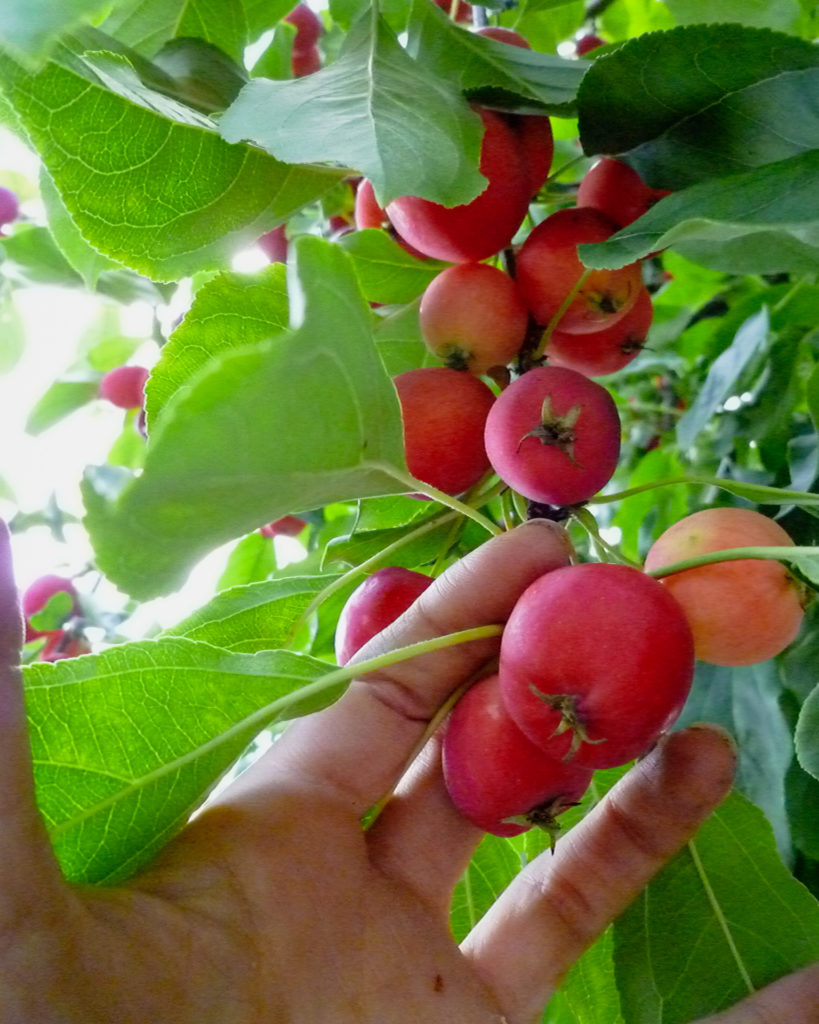
Ripe skin varies from deep red to yellowish-orange; ripe seeds should be dark brown or black. Flesh should be firm and crisp, but not so hard that you struggle to take a bite, and has a slight give when squeezed. Underripe crabapples have crown-like sepals at blossom end still attached, and the seeds are white.
Harvesting
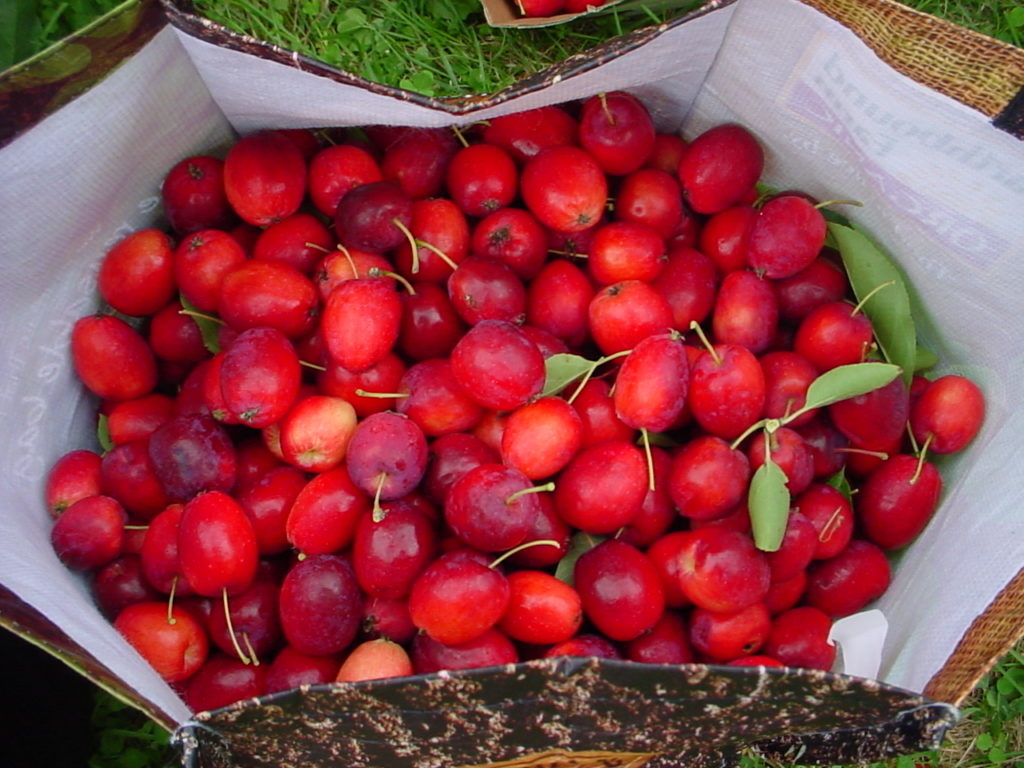
Average yield 10 to 120 lbs
Never force or pull apples off the tree! You can pick by hand or with the assistance of fruit picking poles.
Crabapples work great with the shake and catch method. With the assistance of 3-4 people (or bungee cords), hold up a tarp or a bedsheet by its corners a few feet off the ground. Use a long tool like a picking pole, broom, or rake to hook tree branches and gently vibrate them to let the ripe fruit fall on the tarp. Do not lay the tarp on the ground – the fruit will smash.
Storing and Eating
Apples store for a long time at room temperature (out of direct sunlight). If storing in the fridge, make sure to keep them separate from other foods in a crisper drawer, as they can pick up other food flavours.
To freeze, wash and remove the stem and blossom ends. Freeze on a single layer on a baking sheet, then transfer to a bag or container. Frozen apples are best used for baking and cooking, and can be used without thawing. Apple sauces and juice can also be frozen. Use within a year.
Crabapples can be quite tart so you’ll usually want to process them rather than eating raw.
References:
- Indigenous names: Cree Dictionary; Ojibwe People’s Dictionary; Anishinaabemowin Theme-Based Resource Book